No Somos Frijoles
Playwright: Perla Vanesa Barraza
Director: Perla Vanesa Barraza
Assistant Director: Javier López Quintanilla
Dramaturgy: Perla Vanesa Barraza
Cinematographer: Javier LópezQuintanilla
Sound Designer: Javier López Quintanilla
Scenic Design: Perla Vanesa Barraza
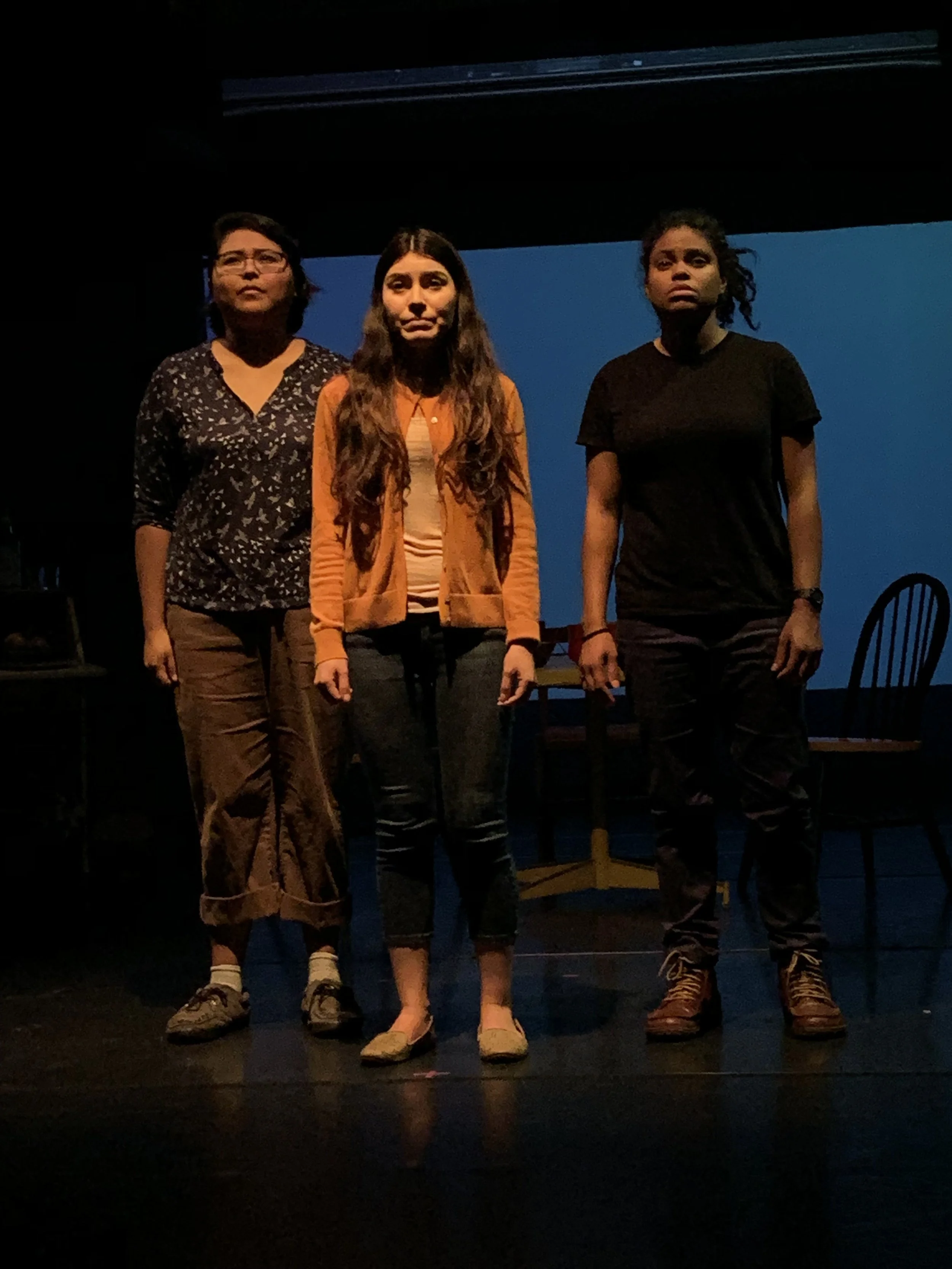
Performances by: Perla Vanesa Barraza, Brenda Miles, Katherine Vasquez
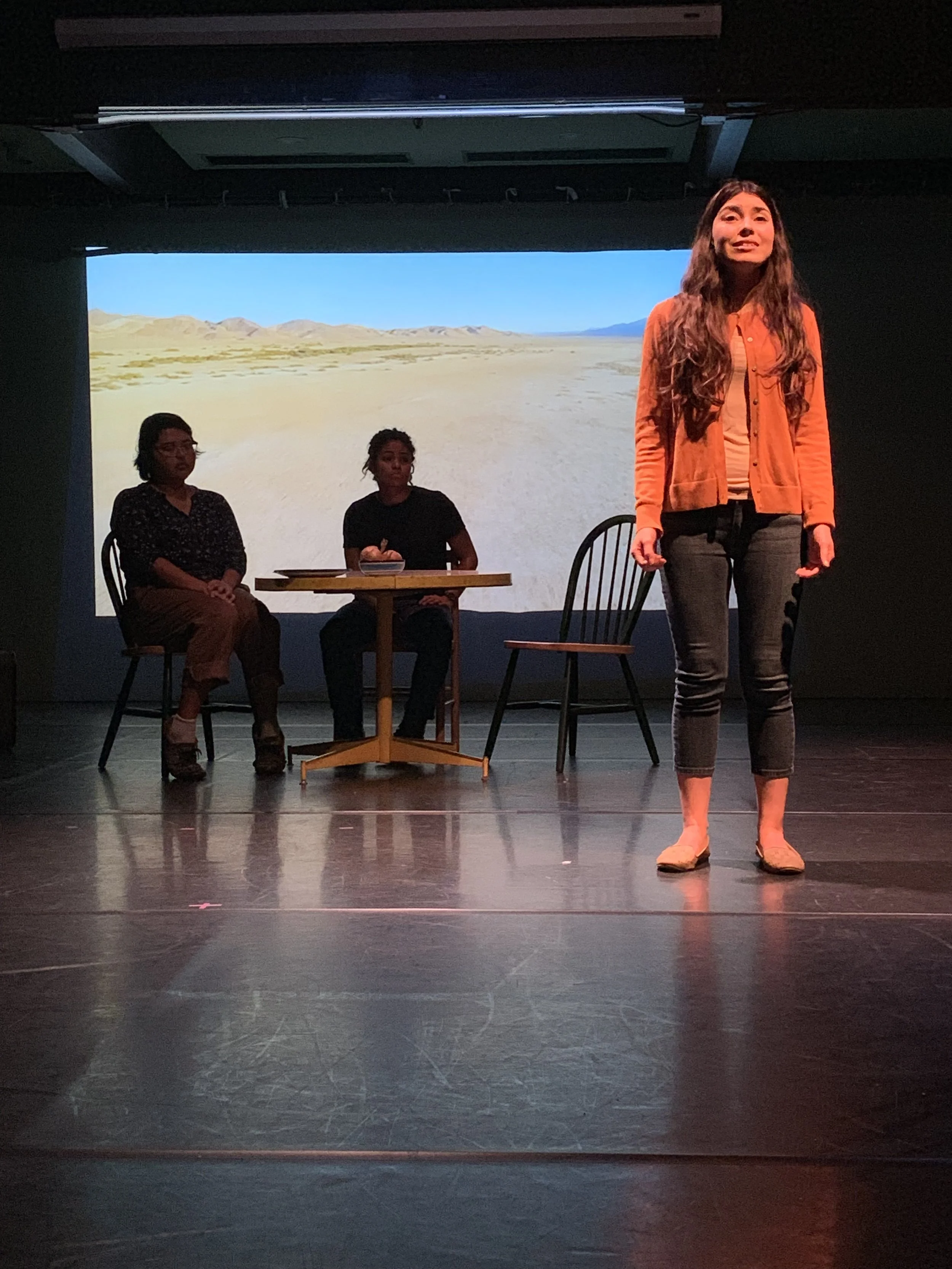
In No Somos Frijoles, three sisters must reckon with the decision to help their machista and abusive father fight his deportation case after his failed attempt to kill their mother. In exchange for collaborating with the police and sending the father to prison, the mother is granted a pathway to citizenship.The family is fractured as they navigate the father’s incarceration and eventual deportation to Mexico. No Somos Frijoles deals with the themes of incarceration and deportation as punishment, the fallacy of the deserving and non-deserving immigrant narrative, and the impact the U.S. Immigration system has immigrant families.
The play was written in a docudrama style with elements of magical realism such as the transformation of the beans/characters of the play. To support the creation of these different characters, the playwright provided her sisters with writing prompts and short interviews that guided the creation of the two bean characters. In this way, she was able to capture multiple perspectives of the familial conflict.
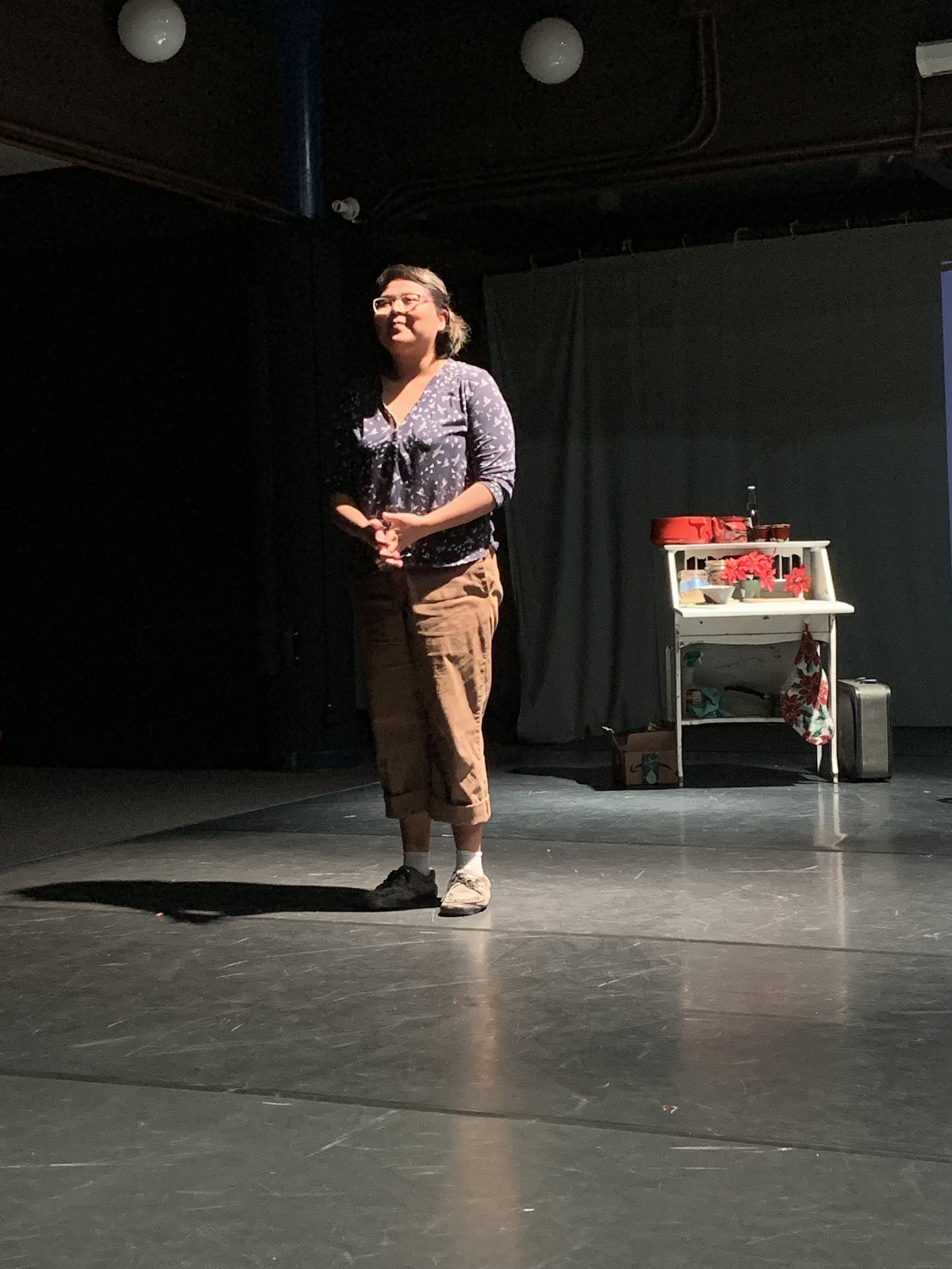
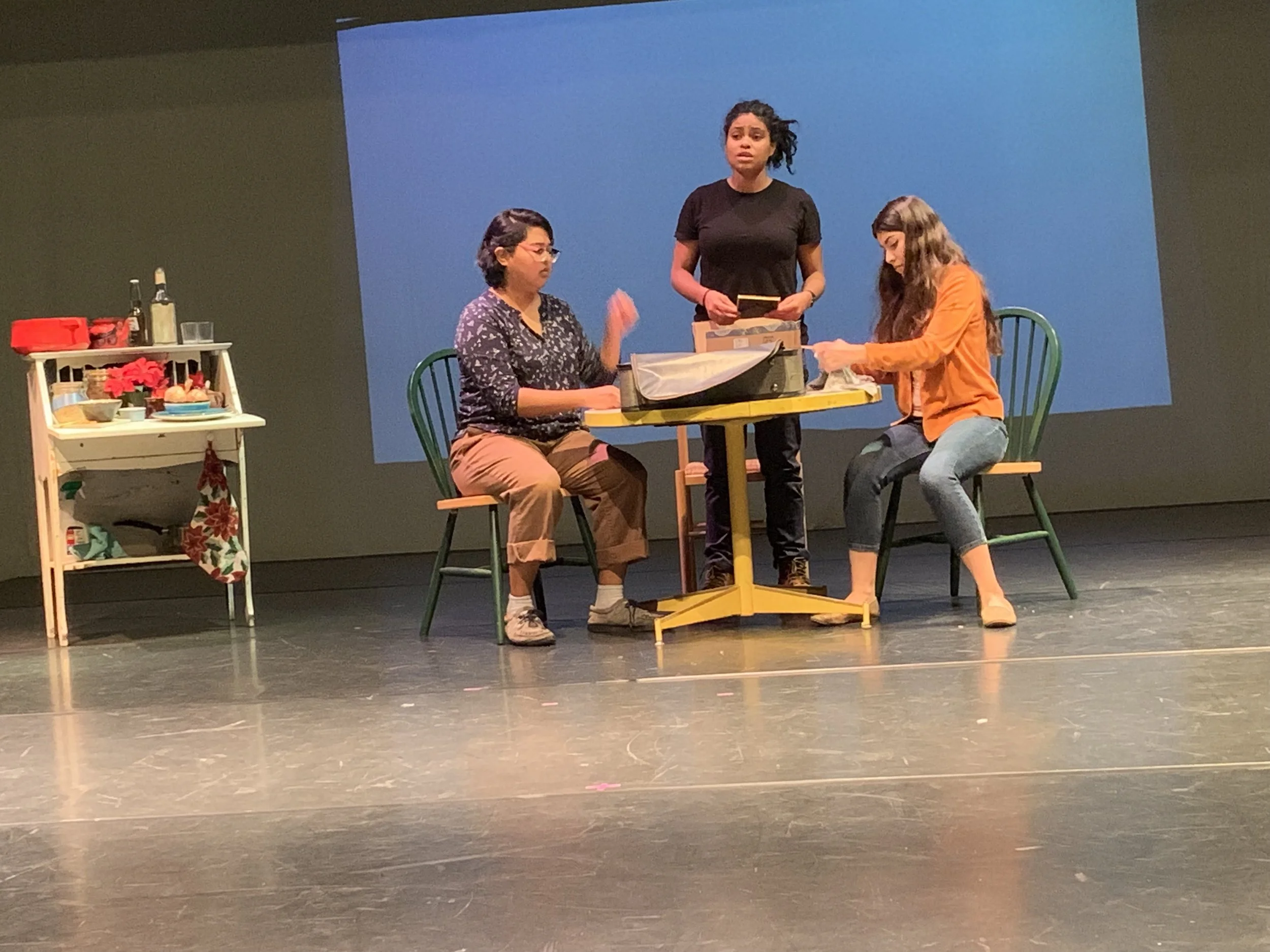
The play is set at the kitchen table; a place where both connection and healing were served. However, the kitchen is frozen in time; decorated with old Christmas decorations. Throughout the play we learn the family’s fracturing began at a Christmas dinner.
In the opening scene of the play, we see the sisters struggling to prepare tamales together. Although many know how delicious tamales are, not everyone understands the amount of work that goes into making them. Culturally, tamales are prepared as a family because it requires stamina, patience, and multiple hands contributing their part. In this first scene, we see the familial tension, foreshadowing how each character deals with conflict. Additionally, throughout the play, scenes are interrupted as the father calls prison. His calls become a constant reminder of the familial disconnection and shame the siblings hold in helping him. Together, they have to find a way to support him while also how to hold him accountable for the harm caused.
Directors Note:
My Father’s incarceration and deportation were easy for people to digest once I explained that he tried to kill my mother. Explaining to others how my sisters and I were trying to help my father stay in the U.S. was tainted with a sense of shame. How could we still love and want to help him when he had been physically, mentally, and emotionally abusive our entire lives? We were so overwhelmed with fighting both his criminal case and deportation case that in truth we did not have time to emotionally process what this all meant. This built up stress, anger, and feelings of heartbreak which manifested in our bodies and in our relationship with one another. Although this time in our life permanently changed us, it did not damage our connection to each other and to our mother. Instead it freed us from my father’s machismo and brought us closer.